

Warning: Reading this article may cause sudden urges to relocate to Africa, invest in tech startups, or question why your city’s innovation ecosystem feels so disappointingly terrestrial.
Warning: Reading this article may cause sudden urges to relocate to Africa, invest in tech startups, or wonder why your city’s “innovation ecosystem” feels so… terrestrial.
While Hollywood churns out visions of flying cars and dystopian AI overlords—clearly written by people who’ve never experienced Lagos traffic during rainy season—African tech entrepreneurs are busy building a different kind of future. One that feels less like Blade Runner and more like Black Panther—minus the vibranium, plus actual Wi-Fi that works.
The African AI market is projected to grow at a compound annual rate of 27.42% from 2025 to 2030, reaching a market volume of $16.53 billion. Already, the continent is home to over 2,400 AI companies. But stats alone don’t tell the story. Because what’s happening across African tech is more than just a business trend—it’s a radical reimagining of how technology can serve people, rooted in local realities and ancestral wisdom.
Here are three African tech startups making science fiction feel like old news.
1. Zipline (Rwanda & Ghana): When Drones Became Guardian Angels
If you had told someone in 2010 that a small East African country would become the world leader in medical drone delivery, they might have laughed and handed you a Wakanda Forever T-shirt. But here we are. Zipline has turned Rwanda and Ghana into launchpads for a future where life-saving supplies fly above pothole-riddled roads and land softly into communities that need them most.
Zipline’s autonomous drones are not just logistics marvels—they are philosophical statements. In an era where Silicon Valley automates to eliminate, Zipline automates to amplify. Their technology doesn’t replace doctors or nurses; it empowers them. A clinic deep in the mountains of Rwanda can now access the same emergency medical inventory as a hospital in Kigali—not in two days, but in 22 minutes.
More than just a delivery service, Zipline is an entirely new form of infrastructure. One that doesn’t wait for roads to be built or red tape to be cleared. And what they’re delivering goes beyond vaccines and blood: they’re delivering dignity. They’re delivering time. They’re delivering equity.
The real genius? Zipline has normalized what once felt like sci-fi. Children in Ghana wave at medical drones the way kids elsewhere wave at ice cream trucks. It’s not just innovation—it’s cultural integration. It’s technology that feels not alien, but intimate.
2. Gugu Robotics (Nigeria): The Machines That Sweat With You
Most robotics companies treat Africa like an afterthought. Not Gugu Robotics. Headquartered in Lagos, Gugu is reimagining automation for the Global South—not by scaling down Western models, but by designing machines that thrive in environments the West can’t even simulate.
Dust? Power outages? Erratic humidity? Gugu’s robots eat that for breakfast.
They’ve engineered industrial robots that adapt to Africa’s complex manufacturing landscape—not the sterilized, buttoned-up assembly lines you see in glossy brochures, but the makeshift factories in Aba, the buzzing workshops in Kumasi, the sprawling markets of Nairobi. These robots are built to sweat alongside humans, not displace them.
But here’s the twist that would make Asimov grin: Gugu’s AI learns from people. Specifically, from the artisans, machinists, and master craftswomen who pass down their expertise in ways no Western algorithm has been trained to grasp. It’s AI meeting African apprenticeship. It’s automation with memory—cultural memory.
Gugu isn’t building tech for some imagined “future consumer.” They’re building for today’s creators: textile weavers, electronics makers, and rural tinkerers who can’t afford million-dollar factories but deserve world-class tools. They’re enabling what they call “augmented craftsmanship”—giving the continent’s makers the mechanical muscles they need without stripping away the soul of their craft.
And in a delicious plot twist, Gugu’s planetary exploration robotics team is also preparing tech for Mars. But the real flex? They’ve already mastered Earth’s toughest terrain: the unpredictability of real life on this continent.
3. Thunder Code (Pan-African): QA for the Real World
Ask any developer where dreams go to die, and they’ll point to the quality assurance (QA) phase. That slow, tedious, error-prone bottleneck where bugs hide like gremlins in the code. Enter Thunder Code—a pan-African startup that didn’t just reinvent QA. They made it intelligent.
Using AI-powered “agents” that mimic human testers, Thunder Code can simulate complex user behavior in ways traditional QA software can’t even fathom. Their bots don’t just test buttons and scripts—they understand what a real person does when a screen freezes, or when an app drains battery on a third-hand Android in the middle of a power cut.
Their secret weapon? Context. Thunder Code’s systems are trained on African datasets—meaning they understand lag, bad UX, network instability, and the very human tendency to press every button out of frustration. This isn’t just AI with smarts—it’s AI with empathy.
They’ve attracted $9 million in funding not just because they’re innovative, but because they’re indispensable. As global developers expand into emerging markets, they’re realizing something African coders have always known: design doesn’t happen in a vacuum. It happens in chaos, on low-end devices, in the back of a danfo bus, or during a blackout when someone’s trying to pay school fees before the system times out.
Thunder Code proves that the next frontier of AI isn’t speed—it’s cultural intelligence. It’s not just about efficiency; it’s about intuition.
The Afrofuturistic Shift: From Tech That Dazzles to Tech That Delivers
All three startups—Zipline, Gugu, Thunder Code—are examples of a deeper, more radical idea: that the future should work for the people who need it most.
Where Western tech often worships disruption, African tech values restoration—of access, of dignity, of shared purpose. It’s not about replacing humans with machines. It’s about making humans superhuman through smarter tools.
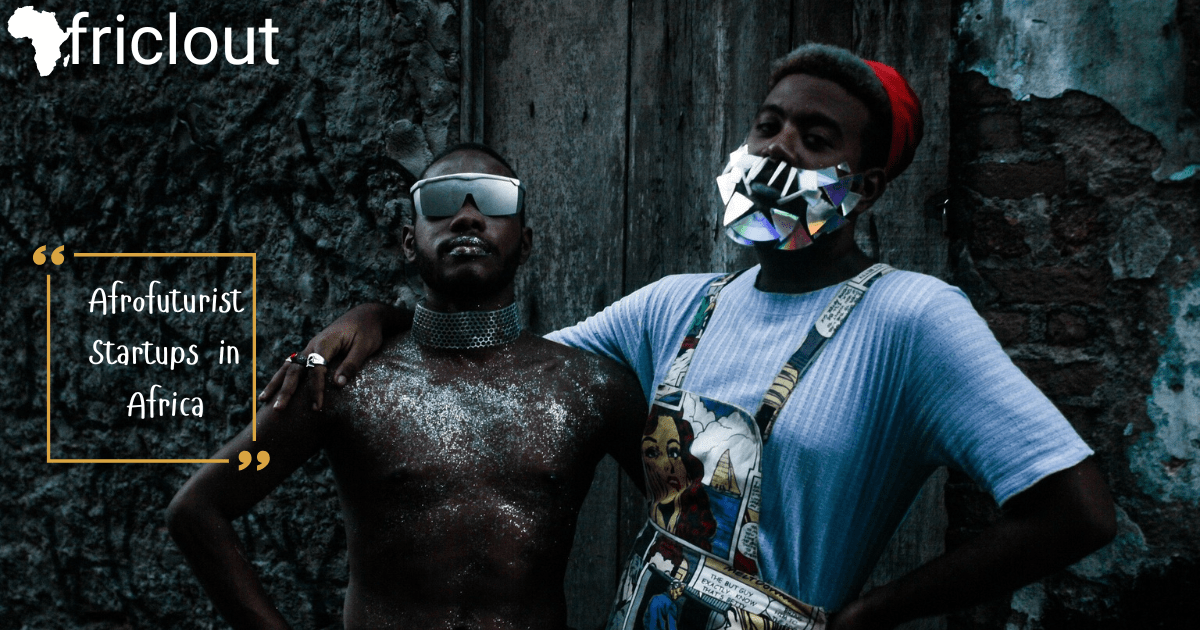
This is Afrofuturism in its most literal, most living form. Not abstract art. Not cosplay aesthetics. But real solutions forged from ancestral intelligence and future ambition. Think of it as silicon meets calabash. Binary meets proverb. And it works.
Backed by institutions like AUDA-NEPAD, Ele-vate AI, and government initiatives such as South Africa’s AI and Robotics Youth Competition 2025, the movement is more than a tech wave. It’s a continental commitment to technological sovereignty and global innovation leadership.
The takeaway is clear: the world doesn’t need more moonshots. It needs earthshots. Solutions rooted in soil, sweat, and society.
Final Thoughts: The Future Was Never in Silicon Valley
Let’s be honest: if Wakanda existed, its tech sector would look a lot like what’s happening in Kigali, Lagos, and Accra right now.
African tech isn’t waiting for permission or recognition. It’s not performing for investors or mimicking trends from Palo Alto. It’s building tools that work on dusty roads, in crowded clinics, on outdated phones, for communities whose needs have been ignored for too long.
And maybe that’s the real Afrofuturist superpower: creating a future where no one is left behind—not because it’s profitable, but because it’s just.
So if you’re still looking for flying cars, maybe you’re asking the wrong question. The future isn’t in the air – it’s already landed in Africa.
What African startup gives you hope for the future? Drop your thoughts below, share this story, and check out more bold tech tales in our AfriTech section.
Now excuse me while I go update my investment portfolio and start learning Kinyarwanda, because apparently that’s where the robots are heading next.
 Africlout