
The matatu driver looked at me like I’d asked him to fly to the moon.
“Thirty dollars? For the whole day?” he asked, bewildered.
He shook his head, muttering something in Swahili that I’m pretty sure wasn’t a compliment.
But there I was—dust on my shoes, a threadbare backpack on my shoulders, and a daily budget that wouldn’t cover brunch in Manhattan—standing at the chaotic nerve center of Nairobi’s transport system, determined to prove that East Africa wasn’t just for safari-goers with platinum Amex cards.
Six months and three countries later, I’d learned something bigger than budget hacks. Traveling through East Africa on $30 a day wasn’t just a lesson in frugality—it was a reckoning with self, story, and stereotype. Because in the world of travel, Blackness often arrives unexpected, underrepresented, and underexplored. Especially in a continent we’re told is ours, but rarely offered the tools to navigate.
This isn’t your average listicle. It’s part dispatch, part diary, and part declaration: that Black travelers belong in every corner of the world, especially here—and we don’t need deep pockets to prove it.
The Economics of Authenticity
Let’s start with the lie: that East Africa is only accessible if you’ve got thousands to spend.
The tourism industry has long catered to Western expectations, peddling sanitized versions of adventure. Think $500-a-day safaris that promise “real Africa” while shielding guests from any actual African reality. Think “cultural encounters” priced higher than most monthly local salaries. This is the colonization of experience: curated, costly, and comfortably distant.
But the real East Africa? It lives in matatus packed with life and rhythm. In street food stalls where the charcoal smokes stories. In modest guesthouses with cold showers and warm welcomes.
In Nairobi, you can live richly—on very little.
- Meal of ugali, sukuma wiki & nyama choma: 150 KES ($1.20)
- Matatu ride across town: 50 KES (40 cents)
- Guesthouse bed: 800 KES ($6.40)
That’s less than $15. The rest is for joy, spontaneity, and survival.
But to tap into that reality, you have to be willing to abandon the script: no glossy brochures, no colonial nostalgia. Just curiosity, resilience, and an open mind.
Uganda: Where $30 Feels Like $300
Kampala taught me that luxury isn’t in thread count—it’s in being seen.
I arrived skeptical. The math didn’t seem to add up. How could a hot, fresh rolex (Ugandan street food, not the watch) cost just 2,000 UGX (55 cents)? A guesthouse in Mengo for less than a cocktail back home? The most memorable meal of my trip—groundnut soup with posho—served in a joint with plastic chairs and no menu, cost 3,000 UGX (80 cents).
Turns out, Uganda doesn’t do pretentious.
It does people.
It does presence.
In Jinja, I skipped the pricey backpacker packages and paid a local operator $25 for white-water rafting on the Nile. Same river. Same rapids. Less Instagram, more insight.
At Bujagali Falls, I sat on a rock watching the sun baptize the Nile in gold, a Nile Special in hand, surrounded by young Ugandans who welcomed me like family. That hour cost me 4,000 UGX ($1.10) and gave me something the luxury lodges never could: belonging.
Tanzania: The Art of Strategic Splurging
Tanzania doesn’t play around with your wallet—Dar es Salaam especially. One wrong move, and your daily budget’s gone by noon. But if you lean into the city’s pulse, it rewards you tenfold.
I found a no-frills guesthouse in Kariakoo for $12 a night. Clean. Safe. Central.
My days started with chai and mandazi (50 cents), continued with pilau and kachumbari at a local hoteli ($1.50), and ended at Kivukoni fish market, where I feasted like royalty on grilled fish and ugali for $3.
The dalla dalla—Tanzania’s legendary mini-buses—charged 400 TZS (17 cents). They were chaotic, yes. But they taught me how the city breathes.
And when it was time to treat myself, I did so with intention:
- $15 for a dhow cruise at sunset.
- $8 for a live taarab show under the stars.
- $10 for a day at Bongoyo Island.
These weren’t luxuries. They were cultural investments.
Then came Zanzibar. Everyone told me $30 wouldn’t last a day. And if you’re chasing the tourist fantasy, they’re right. But I wasn’t.
I stayed near Creek Road in a traditional guesthouse for $15. Ate urojo soup for 75 cents. Got lost in alleyways that whispered stories. Talked cardamom with spice vendors. Argued politics over sweet black tea.
Zanzibar gave me something most expensive trips never do: intimacy.
Kenya: Returning With New Eyes
Coming back to Kenya after Uganda and Tanzania felt like re-reading a book you thought you knew. Suddenly, the plot made more sense.
In Nairobi, I now knew how to move:
- Breakfast at a café in Eastleigh: 100 KES
- Lunch at a nyama choma spot in Carnivore: 300 KES
- Dinner hopping between street vendors: priceless.
Art found me in unexpected corners:
- Poetry nights in Kilimani bars.
- Live music gigs with $2 entry.
- GoDown Arts Centre exhibitions, always free and fiercely local.
Then I took the overnight bus to Mombasa ($8) and landed in coastal bliss.
My $10 guesthouse in Old Town had sea breeze and centuries of history in its walls.
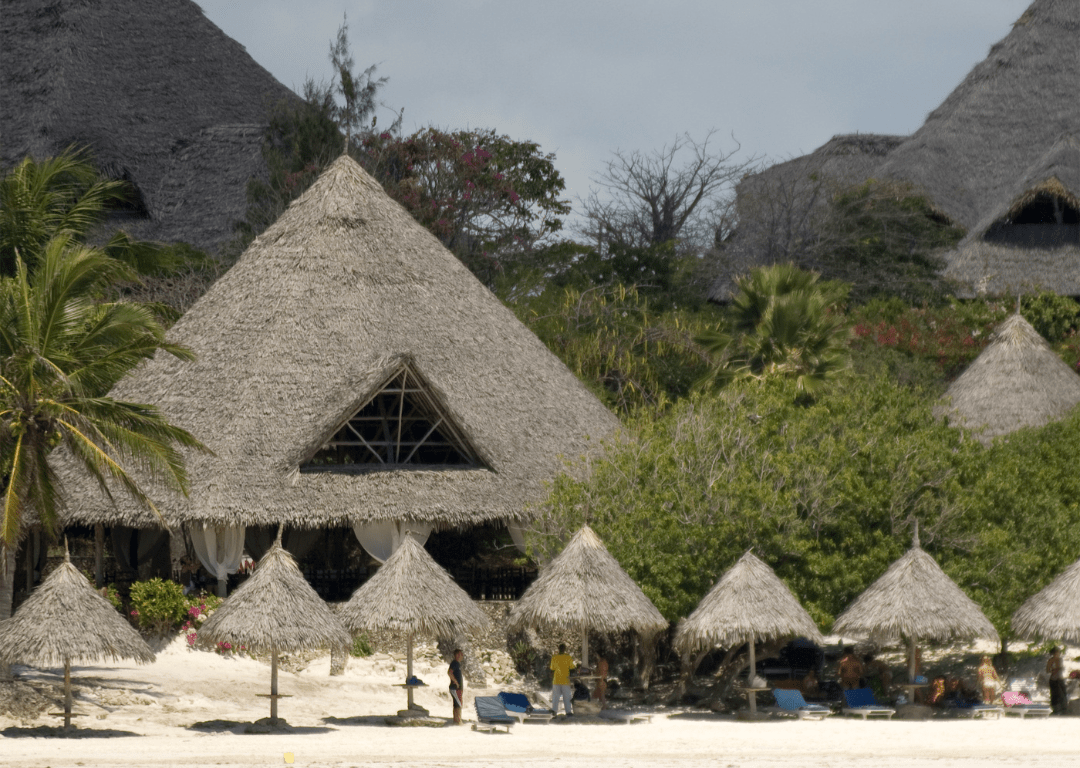
I wandered Fort Jesus (entry: $3), feasted on coconut rice and tamarind fish, and let Swahili architecture teach me that beauty doesn’t always cost money—it just needs attention.
The Hidden Curriculum of $30-a-Day Travel
Here’s the truth: Budget travel in East Africa isn’t just a financial exercise—it’s a spiritual one.
When you strip away luxury, you find something more enduring:
- You see places as they are, not as tourism markets frame them.
- You taste flavors not watered down for foreign palates.
- You ride transport that doesn’t offer seatbelts but does offer perspective.
You also unlearn entitlement.
Because $30 a day teaches you to receive, not demand. To observe, not consume.
You don’t just pass through—you participate.
It’s not voluntourism. It’s not poverty safari.
It’s choosing discomfort as a doorway to depth.
You share meals with strangers who become family. You sit in silence with landscapes too grand to photograph. You learn that hospitality isn’t transactional—it’s cultural.
And slowly, you shed the story that travel must be expensive to be transformative.
Because what changes you isn’t what you spend—it’s what you’re willing to experience.
The Real Cost of Authentic Travel
The matatu driver was wrong.
Thirty dollars doesn’t just buy you a day in East Africa.
It buys you perspective.
It buys you presence.
It buys you the chance to write your own travel story—one that doesn’t rely on filters, influencers, or five-star facades.
So the only question is:
Are you willing to travel not just on a budget, but on purpose?
Because once you’ve navigated Kampala’s chaos with confidence, danced to taarab under Tanzanian skies, or sipped chai in a Zanzibari alley while the muezzin sings the sky awake—you won’t just have visited East Africa.
You’ll have belonged to it. Even if just for a moment.
And that? That’s priceless.
- How Mobile Gaming Is Quietly Taking Over in Francophone Africa
- The Soft Power Battle: Who’s Exporting African Cool Best?
- Why We Romanticize Struggle and Call It Culture
Have you ever traveled East Africa on a tight budget—or are you planning to? Share your story below or tag us on Instagram @theafriclout with your travel moments.
Read next: Dear Africa, I’m Trying to Love You Without Losing Myself
 Africlout